








Despite decades of decline and ongoing threats, the latest data compiled and released in GCF’s State of Giraffe 2025 report reveals that three of the four distinct giraffe species in Africa are showing positive population trends — a direct result of effective conservation actions, dedicated research, and growing global awareness.
Working with countless partners in Africa and internationally, the GCF team collated the latest population numbers and an updated distribution map for giraffe by compiling data from ground and aerial surveys, through interviews and questionnaires, online searchers, game counts, camera trip data, personal observations and much more.
“We are thrilled so share these updated numbers. Not only are our conservation efforts paying off, but with the support of our partners, we are getting better at monitoring and protecting these iconic creatures,” says Stephanie Fennessy, GCF’s Executive Director.


Species by Species
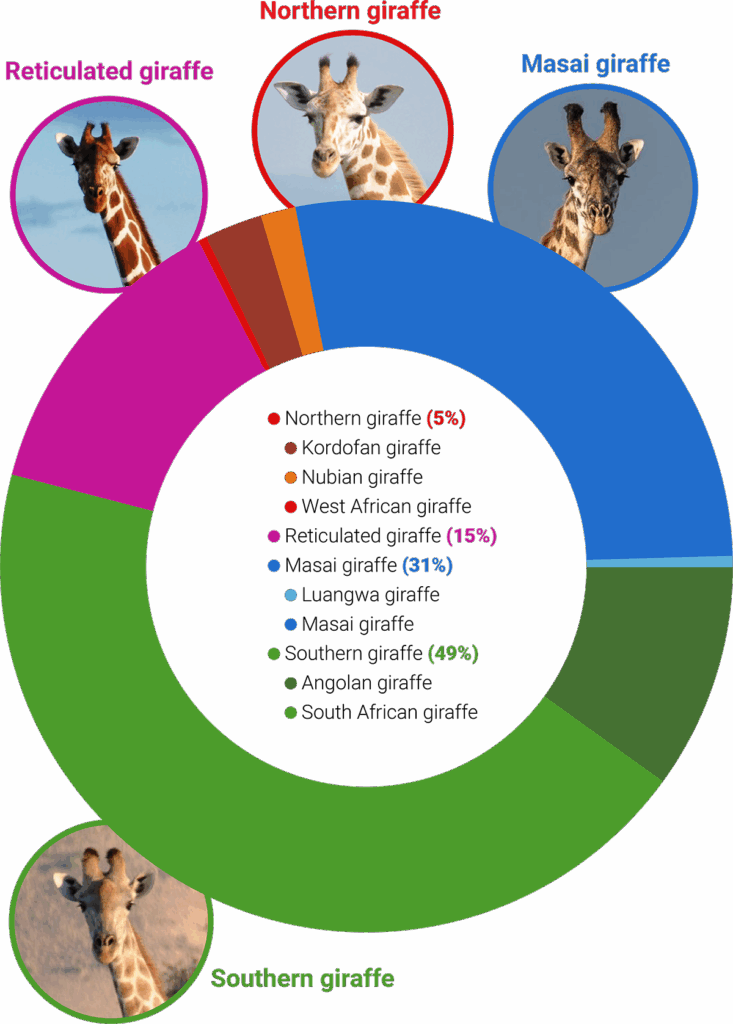
Northern giraffe – With 7,037 individuals remaining, this species remains one of the world’s most threatened large mammals. However, a nearly 20% increase offers hope amidst ongoing insecurity in its range.
Reticulated giraffe – Estimated at 20,901 individuals, this species shows encouraging trends and appears to be increasing, though reliable data is difficult due to security issues in northeastern Kenya and limited access in parts of Ethiopia and Somalia.
Southern giraffe – Found across southern Africa, this species shows the most remarkable growth. An estimated 68,837 individuals now roam the wild — a 50% increase in just five years, largely due to improved survey coverage and increased awareness.
Masai Giraffe – Stable numbers across Kenya (estimated at 43,926) are a strong sign of resilience. In Rwanda, the population continues to grow steadily, and Zambia’s Luangwa giraffe are also expanding in range and number.
A Game-Changing Conservation Tool
GCF is also launching the Giraffe Africa Database (GAD) — a centralised platform for monitoring giraffe populations across Africa.
“Only a few species benefit from this level of detail. GAD will transform how we plan and implement giraffe conservation,” says Dr Courtney Marneweck, GCF’s Conservation Technology Coordinator.
GCF: Leading Giraffe Conservation in Africa
Operating in 21 African countries, GCF is the only organisation dedicated solely to giraffe conservation. It plays a vital role in developing and implementing National and Regional Giraffe Conservation Strategies in collaboration with governments and stakeholders. So far, 14 countries have adopted such strategies — proving that coordinated, science-based conservation works.
“These new data call for an urgent reassessment of giraffe on the IUCN Red List and renewed attention from international agreements like CITES. Each species deserves tailored protection — one-size-fits-all won’t save them,” says Dr Julian Fennessy, GCF Director of Conservation.
Why it Matters
In 2016, giraffe were uplisted from Least Concern to Vulnerable on the IUCN Red List. With the release of State of Giraffe 2025, there is now a strong case for listing three of the four species as Endangered or Vulnerable. These new trends provide hope — but the threat of silent extinction remains.